Hi there — it’s not my week to post, but I want to share two videos that I use with my high school students (and once with middle school students actually) about the concept of Orientalism:
And this one is from Al Jazeera:
As an interesting aside, the Al Jazeera one had a little box below reading “Al Jazeera is funded in part or in whole by the Qatari government” while the BBC had no such box even though the BBC is likewise government funded, albeit by the British. Orientalism at work?
I hope this helps with your understanding of Said!
While reading through this week’s articles and watching Chimamanda Adichie’s TEDtalk there was one word constantly popping up in my head burdened. Alice Walker, Audre Lorde, Barbara Smith, Anzaldua, Barbara Christian, and Chimamanda Adichie, all focus on the burdens and struggles that come with being a Black woman and a Black woman who is an artist.
In Alice Walker’s In Search of Our Mother’s Garden, she focuses on the burdens that black women face daily because they are forced to carry the weight of the issues that no one else wants to face, “Black women are called, “the mule of the world.” Because they have been handed the burdens that everyone else refused to carry.” What resonated with me while reading Alice Walker’s article is how black women automatically lose even more respect and receive lower status just by being a black woman and being an artist. It angers me so much. Another line that I felt stuck with me from Alice’s article was, “What did it mean for a black woman to be an artist in our grandmother’s time? It is a question with an answer cruel enough to stop the blood.” This line stuck with me because it shows the dangers and the burdens that black women face by being a black woman and being a writer.
In Chimamanda Adichie’s TEDtalk, “The dangers of a single story,” she focuses on a similar idea of burden that Alice Walker talks about in her piece. I felt myself needing to watch this TEDtalk again just because of how shocked and angered I felt by everything Chimamanda talked about. In this TEDtalk, Chimamanda focuses on how we can develop a “single story” of someone based off the limited prior knowledge we may have. Chimamanda explained that a single story is showing people as one thing, as only one thing over and over again, until that is what they become. Chimamanda tells the story of a poor boy named Fide, who was the new house boy for her family. Through visiting Fide’s village and seeing where he came from, for the first time Chimamanda realized she had a single story about someone. Chimamanda had assumed that because Fide came from a poor family that no one from that family could create something as beautiful as the basket Fide’s brother had made.
“It had not occurred to me that anybody in his family could actually make something. All I heard about them was how poor they were, so that it had become impossible for me to see them as anything else but poor. Their poverty was my single story of them,” this was the one line that really stuck out to me and stayed with me throughout watching this entire video. This line made me think of how many times in my life I have caught myself or someone else creating a single story or being biased about someone or something. The next story Chimamanda told was about her first roommate in college. Her roommate assumed that because she was from Nigeria, Chimamanda only listened to tribal music and didn’t understand how to use a stove. This story reminded me of a story one of my friends recently told be about a single story someone had about her based on the hometown she is from. This friend and I both come from the same very small hometown in upstate New York that no one knows about unless they have vacationed here. My friend was sitting in her first day of French class this semester while her professor was asking people to share where they have lived throughout their life. My friend shared that she had only lived in one place her entire life besides being born in the hospital. Her professor was shocked, not because she had only lived in one place her entire like, but because her small hometown he had never heard of surprisingly had a hospital. A couple days later this same professor was sharing a French history lesson with his students. He stumbled upon a horse and buggy and he made a comment to my friend that this was the only mode of transportation she must have in her small town. I know that this situation between my friend and her professor was all a joke, but it still made me think of how we can judge someone or have a single story of someone based on where they came from.
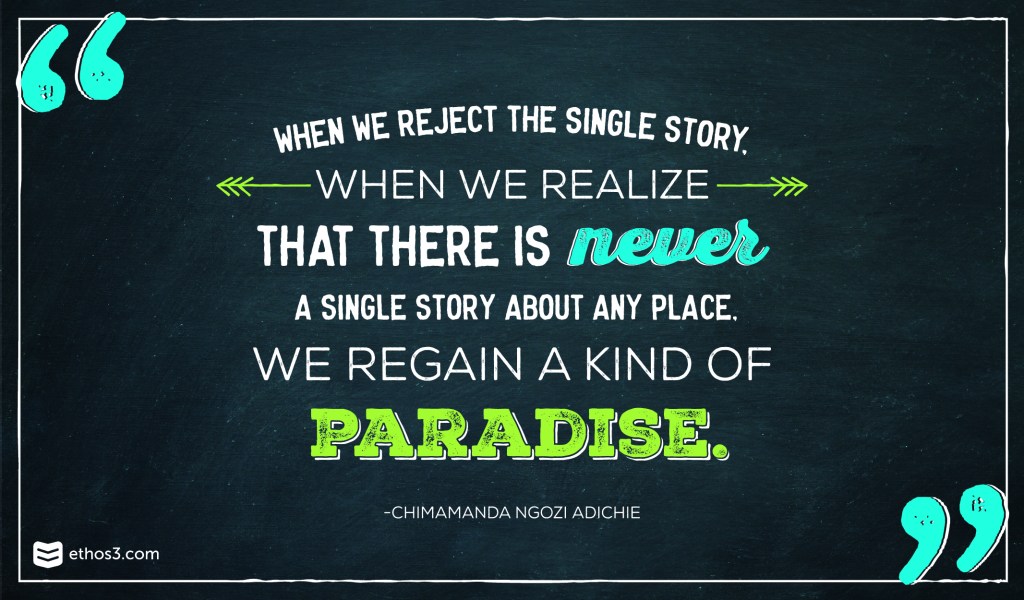
Throughout Chimamanda’s entire TEDtalk she focuses on how dangerous it can be to have a single story of someone. A single story can rob people of their dignity, it can create stereotypes, and it makes us different. Having a single story about someone makes that story the only story about them, which can create a biased view of a person. While watching this TEDtalk I noticed myself thinking back to Alice Walker’s piece, “In Search of Our Mother’s Garden,” and how in this piece she talks about the struggle black women writers face being a woman and being an artist. This made me think of how black women of the past and today have a single story written about them. This single story written about black women writers has kept these women from using their creativity for years. Chimamanda ends her TEDtalk with the positives of have many stories, rather than having just one story, “That when we reject the single story, when we realize that there is never a single story about any place, we regain a kind of paradise.” The ending to Chimamanda’s TEDtalk in a way reminded me of the ending to Alice Walker’s piece, “Guided by my heritage of a love of beauty and respect for strength—in search of my mother’s garden, I found my own.” This reminded me of the ending to the video because it was through looking at others stories and through looking at the creativity of others, that Alice Walker was able to find her own creativity and passion for writing.
Response question: What do you think is the single story that is written about black women as writers?
Response question: Has there ever been a time you felt that you had a single story of someone? Have you ever caught yourself being biased towards someone or something? You don’t have to share if you don’t feel comfortable!
I’ve been thinking a lot about privilege and the social hierarchies they create and draw from. Those who find themselves at the tops of these hierarchies are also the ones who establish the order of those below them, divvying up the privileges allowed to each section. Of course, those with all the control are going to keep the best privileges for themselves at the top, while those below them get the scraps. And this is where we get the self-sustaining hierarchy. Those at the top stay at the top, where their voices are consistently and constantly heard. They are not misrepresented because they represent themselves. I find myself just underneath the top, the only thing that disqualifies me from being up there is my gender. I am a cis-gendered, heterosexual, white young woman, and that allows me certain privileges: less than a white man, but more than those in minoritized groups. My stories are heard, but through a veil. I cannot be too opinionated, or too loud with those opinions, or else I lose my speaking privileges. But at least I have the parameters for how to be heard. For so many others their voices are never heard, or if they are they are masked and distorted to fit the top’s perceptions.
These readings feel very grounded in feminine energy and female power. Power that has always existed in us (women), but historically has been–and continues to be, repressed. Women do not do, they just are; they just exist. They are props on the patriarchy’s stage; merely there to further emphasize or assist the character, but they do not have a role of their own. We saw the beginnings of this in the readings from last week, Virginia Woolf’s ideas from A Room of One’s Own, which continues to be foundational to the readings this week. We can use this foundation to build other feminist perspectives, perspectives of women of color. This is a necessary building, but it first requires us to break down the prejudices and “single-stories” of what feminist writing is.
There is no one true “feminist work”, not even one type of feminist work, or one genre. Feminist writing is a collection of women from everywhere, of any and all identities writing from a place of inner-power and love for themselves and other women. We write to educate, to enliven, to impassion, to anger, but we do it as ourselves not what we should be. In her essay “Poetry Is Not a Luxury” Audre Lorde writes about the power of women writing poetry. To her, poetry is not a specific form of prose with certain rules, but a way to survive. Lorde writes, “I speak here of poetry as revelatory distillation of experience, not the sterile word play that, too often–in order to cover a desperate wish for imagination without insight” (Lorde 37). Writing, for women, is taking an experience and condensing and distilling it to its purest substance. Reveling in what that distillation reveals, giving name to what was once, “nameless and formless” (Lorde 36). To live in this patriarchal world, women need to share, they need to crystalize their experiences and feelings because some other woman is feeling them too. We cannot survive in the unfeeling world of men who value thought and success above all else. Women have broken their backs trying to fit, to please. They have lost their minds to it.
Alice Walker writes of these women who lost their minds trying to survive without an artistic outlet. These women who became husks of their former selves without writing, drawing, painting, dancing. They toiled in fields, were beaten, broken, and abused. The world was not listening to the voices screaming inside them, but as Walker’s essay suggests, they knew somewhere inside them was a power. Someday that power would be able to come out and be heard. Walker writes, “they waited for a day when the unknown thing that was in them would be made known; but guessed, somehow in their darkness, that on the day of their revelation they would be long dead” (Walker 402). Again this idea of revelation coming out of this dark, ancient power as Lorde writes in her essay. Walker asks readers what they think happened to these enslaved artists? These women had so much spirit and creativity boiling under the surface, but they were slaves. Their voices, their art was not to be seen or heard by those at the top.
These women that Lorde and Walker illustrate in their works used their experiences and their histories to create their works. While a quilt or garden that Walker discusses, may not seem like a feminist work in its conventional definitions, it is their version of a feminist work. What they created in response to their world. The experience as a woman in their world was unique to them. No one could create what they did because no one else lived it. As Walker writes, “Guided by my heritage of a love of beauty and a respect for strength-in search of my mother’s garden, I found my own” (Walker 409). Without hearing her mother’s voice in her gardens, Walker would not have found her own. This is why opening up the scope of feminist literature is so important. The absence of all voices being heard, means the feminine experience is misrepresented. Unfortunately, that is what happened in the earlier feminist movements. A hierarchy emerged here, of which woman was the “true feminist” woman leading to a misrepresentation of an entire gender.
For too long women’s voices have been misrepresented, if they were heard at all. Lorde writes, “for within living structures defined by profit, by linear power, by institutional dehumanization, our feelings were not meant to survive. Kept around as unavoidable adjuncts or pleasant pastimes, feelings were expected to kneel to thought as women were expected to kneel to men” (Lorde 39). Especially for women of color, getting their voices heard clearly without being distorted by prejudices and perceptions is nearly impossible. Women are often coached to not get too emotional or their points will never be heard, but our feelings are our power. The female perspective on the world, the way we communicate, and experience is uniquely suited to be just that: another perspective. No more kneeling, no more repressing, no more trying to fit. Feel it all.
Discussion Questions:
What do we do with these hierarchies? Do we keep the same structure, but re-arrange those at the top and bottom, or do we keep pushing and create something brand new? What would that look like?
How do we best give voice to the voiceless? This borrows a bit from Jacob’s facilitation last week, but how do we best support and build up our minority communities?
Heart sick. Alice Walker, Audre Lorde, Barbara Smith and Gloria Anzaldua speak across nearly half a century to tell us they are heart sick.
And who can blame them? They are writing and searching, vainly, for other black women writers who have gone before them. But they could search all of English literature and find only crumbs when they need bread.
“I think of the thousands and thousands of books, magazines, and articles which have been devoted, by this time, to the subject of women’s writing,” writes Smith in her 1978 “Toward a Black Feminist” published in The Radical Teacher “and I am filled with rage at the fraction of those pages that mention Black and other Third World women.”
Rage. A righteous rage, surely.
I own a Concise Anthology of American Literature from 1974, edited by George McMichael of California State University, and in its first 1,000 pages there are only two, white women writers included: Anne Bradstreet (1612-72) and Emily Dickinson (1830-1886). McMichael writes in his preface that his anthology is “…a generous sampling of works and authors significant in shaping American literary history” (xiii); apparently, Phillis Wheatley, Sojourner Truth and Harriet Jacobs were not “significant” enough for McMichael to include in the 200 years of his anthology that lack any women’s voices, let alone black women’s voices.
It’s enough to make anyone heart sick.
Walker argues it’s this sort of dream deferred that left the land’s black mothers with a heritage of religious zealotry and exploding madness.
“Listen to the voices of Bessie Smith, Billie Holiday, Nina Simone, Roberta Flack, and Aretha Franklin, among others, and imagine those voices muzzled for life,” Walker writes, referring to the celebrated singers in her “In Search of Our Mothers’ Gardens” from 1972. “Then you may begin to comprehend the lives of our ‘crazy,’ ‘Sainted’ mothers and grandmothers.”
Yes, black women authors are left out, “a raisin in the sun.”
And we can see their absence, if we dare to lift the veil of literary canon. Of the 2,000 pages in McMichaels’ anthology only two are devoted to a woman of color — pages 1714-1716 belong to the Pulitzer Prize-winning Gwendolyn Brooks. Would she, a black woman, have made it without the prize? Probably not.
Without directions to the trails already blazed through arduous, courageous toil, women of color are faced with the false choice to make a brand new path or just stay home.
“How hard it is for us to think we can choose to become writers, much less feel and believe that we can,” writes Gloria Anzaldua in “Speaking In Tongues: A Letter To 3rd World Women Writers,” a 1980 love letter. “What have we to contribute, to give? Our own expectations condition us. Does not our class, our culture as well as the white man tell us writing is not for women such as us?”
It’s the reliance on the logic of European culture — white, patriarchal culture— as the only real civilization or path to freedom that leads women to forget and forsake their true creative powers, Audre Lorde argues in her 1977 article “Poetry Is Not a Luxury.”
“The white fathers told us: I think, therefore I am,” Lorde writes. “The black mother within each of us – the poet – whispers in our dreams: I feel, therefore I can be free.”
But where can we find these black mothers, these poetesses? They are not in my anthology. Some theorists thought they would be easier to find if they were grouped together, a kind of Black Feminist Criticism with a room of their own. “A viable, autonomous Black feminist movement in this country,” writes Smith in her “Toward a Black Feminist” essay, “would open up the space needed for the exploration of Black women’s lives and the creation of consciously Black woman-identified art.” So far, so good. But who holds the key to this sacred space? And which poetesses may come in?
“So often I have read books on feminist literary theory that restrict the definition of what feminist means and overgeneralize about so much of the world that most women as well as men are excluded,” worries Barbara Christian in her 1987 “The Race for Theory” published in Cultural Critique. “Nor seldom do feminist theorists take into account the complexity of life — that women are of many races and ethnic backgrounds with different histories and cultures and that as a rule women belong to different classes that have different concerns. Seldom do they note these distinctions, because if they did they could not articulate a theory.”
Place women in a box — even a well-meaning box, like the box of “Black Feminism” — and unintended miseries will fly out its open lid.
So where is the hope for black, women writers? Where can we find the virtue that remained when Pandora’s curiosity lifted the golden lid?
Well, it’s not in a 1974 literature anthology.
When we look at the canon of English literature — the writings of patriarchal England and its colonies — we should not be surprised that women authors are not there. It’s the wrong place to look. But that doesn’t mean the writings of hope can’t be found.
They’re found between the pages of Maya Angelou and Toni Morrison, certainly. In the lyrics sung by jazz greats, songwriters and black bisexuals Billie Holiday and Bessie Smith. It’s in the fearless reporting of Ida B. Wells, a black woman and investigative journalist covering lynchings in the 19th Century.
Shaking off our European lens, we find more women of color and writers all!
Here are the Native Indian grandmothers, passing on oral literature to the children. Chinese women in Hunan are writing in their women-only script called Nüshu. Here are Egyptian priestesses writing in hieroglyphs in temple libraries. Travel back 4,000 years and discover the world’s oldest known poem — a hymn written by the priestess Enheduanna in modern-day Iraq (Ancient History Encyclopedia). Perhaps we women can take hope, like the ancient Greek poetess Sappho of Lesbos, knowing that, “Someone, I tell you, will remember us, even in another time.”
Response question: Is a separate black feminist criticism limiting and prescriptive or necessary and protective?
Response question: What should be included in English literature anthologies? What should be excluded? Who should decide?
Sometimes when reading, you can read through a passage, realize you have no idea what you just read, say “ah, well,” and keep moving on. Other times, you snap out of your daze and re-read what you just read because what you have been reading is too good to let a momentary attention lapse stop you from taking it all in. When it came to the readings for this week regarding feminist theory, I often found myself wanting to re-read anything I missed, as I sat back astonished at how much information I felt like I was taking in from the words of Virginia Woolf, Keeanga-Yamahtta Taylor, Sara Ahmed, and Kimberle Crenshaw. I have taken part in my critical thinking sessions over my semesters as an undergraduate student in the Adolescent Education: English program, but the critical thinking I could feel these authors performing, and thus causing me to perform, was exceptional in my opinion. In particular, Taylor and Crenshaw’s pieces have caused me to ponder a couple of questions that, even if I thought of them before, I do not have sure answers to.
Taylor and Crenshaw, whether intentionally or not, both talk at length in their pieces about the idea of intersectionality. Taylor discusses not only how important black feminism is to her contemporary social climate, but why fighting for black women’s rights and justice is superior to fighting for black rights and justice and women’s right and justice separately. Crenshaw essentially does much of the same in her TED talk, but she puts a title on it: intersectionality. Taylor and Crenshaw’s idea of intersectionality, which is to look at all of the prejudices someone is dealing with together, rather than separately, really caught my attention. The reason for this is pretty plain and simple — I have often wondered whether it is better to look at battles that oppressed people are facing together or separately. I have also wondered whether or not if someone is dealing with multiple prejudices at one, is it better to focus on one of those prejudices at a time, or to tackle them at the same time?
Up until these readings, if you had asked me if, let us say, a black woman should fight back against racism and sexism that she is facing at once, or separately, I probably would have said separately. It made sense to me that the most likely way for someone to fight back successfully against oppression they are facing is to take things one at a time, otherwise I figured not enough attention would be paid to each piece of oppression over time. In other words, I figured that the black woman from the example above, and those like her, should focus on fighting back against racism or sexism on its own, and then when there has been sufficient progress in that battle, then move onto the other form of oppression. This stems from an idea that I had developed when having discussions about the LGBTQ community in some of my past classes. During these discussions, I formed the idea that it was not fair to “lump” these oppressed groups together, and that it would be more beneficial for these groups if they stood out on their own. I felt like putting them together only diminished their individual importance, and so going into reading about black feminism/intersectionality, I felt like talking about racism and sexism together (although other topics, like heterosexism, are included as well) would not give each issue enough attention.
To make a long story short, Taylor and Crenshaw changed my mind. Now, it is not like I read a few lines from Taylor and immediately changed my opinion as a whole, and it is not like I listened to a few minutes of Crenshaw’s TED talk and felt like I was wrong and stupid before having listened to her. Taylor and Crenshaw really just brought up a number of thoughts and ideas that I had not considered much of, and upon hearing or reading these ideas, I was forced to critically think about a number of topics and opinions (which I guess is the point of this class, so 10 points to Dr. Savonick for grouping these readings together). Taylor’s introduction to the “Combahee River Collective Statement,” and the CRC statement itself, made me think about how difficult it would be for a black woman to separate her battles against racism and sexism. Simply put, these black woman are not dealing with racism and sexism at very different times, they are dealing with them at the same time. In fact, looking at racism and sexism so separately can only lead to more trouble for black woman, which Crenshaw attested to when telling the story about Emma DeGraffenreid. DeGraffenreid had a court case thrown out against a potential employer that did not hire her, in her eyes, because she was a black woman, because the judge noted that this employer was hiring black people and was hiring woman. In other words, the judge felt this employer was not being sexist towards woman or racist towards black people, but Crenshaw points out that DeGraffenreid was feeling this employer’s racism and sexism at the same time as the result of being a black woman. If the judge had looked at how DeGraffenreid, as a black woman, could be facing this combination of racism and sexism, or this intersectionality, then maybe he would not have been so keen on throwing out DeGraffenreid’s case. It was when reading and listening to points like those I have talked about in this paragraph that I realized that it is almost next to impossible, and probably unreasonable, for a person who is facing multiple forms of oppression to only focus on one form at a time. It is also likely next to impossible and unreasonable to separate similar forms of oppression from each other, because these issues and forms of oppression do not happen so singularly and individually like I may have previously though, they often happen together and at the same time (which seems to be Taylor and Crenshaw’s point, so 10 points to them as well).
With all of this being said about the clarification of some of my ideas and opinions regarding racism, sexism, and oppression, I do still have some questions that these readings brought up for me. While I agree now that the concept of intersectionality is important to recognize and use in battles against oppression, is it possible that combining too many different forms of oppression can have that negative effect on the oppressed that I was worried about? In a specific instance, I wonder if extending the LGBTQ acronym to something like LGBTTQQIAAP could be dangerous. I would love to hear what anyone reading this thinks in a comment or in class. I also wonder about if these battles against oppression can be fought and (at least partially) won by those being oppressed, or if they absolutely need the help from some of the oppressors in order to gain progress. For example, do black people, civil rights organizations, and black rights movements need white voices and white members in order for racism to weaken? Does it make more sense for those organizations and movements to only be led and occupied by black people, and if so, is that a sustainable way for black people to fight towards justice?
These readings not only gave me many answers, but it also gave me some questions to continue to think about. If anyone has something to say about those questions, I would love to hear it, and if you read all the way down to here, I appreciate you and consider you a hero of mine.
I wanted to blog / facilitate this week because I wanted to dive more into Virginia Woolf, who is one of my favorite historical figures. I was first drawn to Virginia Woolf and her life story in high school when I first experienced depression, but I find her work from the 1920s to be particularly interesting in this current social moment and given the parallels between the 1918 flu epidemic and today’s pandemic. Given the current mental load that we are all experiencing as a result of the pandemic and current events, I traced how some of our authors this week–specifically Virginia Woolf, Keeanga-Yamahtta Taylor, and the women of the Combahee River Collective–explore mental illness in their construction of feminism. In class, I will be leading us through a short history of First Wave feminism and a shared annotation activity.
There is a long and potent history between supposed mental illness and the feminist experience. We can dive into a variety of historical examples–for example, suffragette Alice Paul being institutionalized–and I will be going through some of these examples in class as we explore the history of First Wave feminism and how it relates to Woolf. However, since we are drawing connections between the past and the present–I’d like us to consider a common meme on social media– a list compiled of causes of mental illness in patients admitted to a West Virginia asylum. Regardless of the accuracy of this meme, the number of complaints specific to women (ie “imaginary female trouble, marriage of son”) is a sobering reminder that those who defied gender norms–and in rejecting them, could be called early feminists–were frequently labeled as “mentally ill.” This meme is particularly potent and shared widely to this day–and I think a big reason for that is the propensity for doctors to still dismiss women’s complaints as psychosomatic, an effect that is amplified for women of color.
Comic relief– but really, I’m always amazed at how much memes tell us about how history is portrayed in our own society!
Woolf explores this phenomenon in a different light in A Room of Her Own, explaining that women frequently experience mental distress upon recognizing the conditions of their oppression. In the fable of Shakespeare’s sister, she notes that “any woman born in the sixteenth century certainly would have gone crazy…” (898). What I find most interesting about Woolf’s characterization, however, is her discussion of “genius” and how interplays with class, race, and ability.
In the essay, Woolf notes that genius “is not born today among the working classes”–which seems at first glance to be an incredibly classist statement. However, she validates this statement with the remark that “How could it have been born among women…whose work began… almost before they were out of the nursery?” (897) While this does recognize that ability can be found in individuals of all genders and class backgrounds, this formulation is still limited by the assumption that “genius” is restricted only to skills developed in formal education. She recognizes the potential for genius among women in lower classes, but infantilizes these women, claiming that as a result of their upbringing, they are now incapable of producing great works. Would Woolf have recognized the “genius” of folksongs or handcrafts? Additionally, I am intrigued that, with a rather limited definition of what “genius” actually is, she laments that “any woman born with a great gift in the sixteenth century would have certainly gone crazed” (898). What would Woolf have thought of a woman who, with no “great gift,” still recognized the conditions of her oppression? (Or would that recognition be in itself an indication of a “great gift?”) In Woolf’s formulation, mental unrest in response to oppression is a natural response for those with superior ability.
Woolf’s formulation of mental illness demonstrates both her class background and the experience of white Britons in an age of empire. I’ve always been fascinated by Virginia and Leonard’s relationship and collaboration, so I was interested–but not entirely surprised–to learn that Leonard had begun his career as a colonial administrator. Ever since I read Mrs Dalloway in high school, I’ve also been fascinated with how Woolf addresses immigration–in that text–through the character of Lucrezia, an Italian immigrant married to a World War I veteran suffering from PTSD. Yet, in her short parable, she makes no mention of race or immigration–which is not surprising. Like many other white female feminists of her time, Woolf’s life and actions were incredibly radical, yet also worked within the traditional system and centered the experiences of upper-class, white females in the Western world.
In contrast, the Combahee Women’s Collective directly addressed both issues of empire and issues of mental health–for ALL women, not just the “mad,” gifted few. As Taylor notes in her introduction, the CRC had an internationalist focus, making this important distinction to demonstrate “solidarity with women in countries that were often suffering because of the policies and military actions of the US government” (12). While this might seem radically ahead of Virginia Woolf’s time, it is important to note, as Taylor does, that in the early 1920s (the same time that Woolf was selling A Room of Her Own to the wealthy, well-read white women of the British Empire), Lenin was identifying and recognizing the levels of oppression that minorities faced in addition to the class struggle (as a side note: this is something that I don’t know a lot about, but I’m interested in learning more about!)
The connections between the CRC statement and mental illness are less obvious than in A Room of Her Own, but are nevertheless potent. As Taylor notes, the CRC itself and Black feminists, in general, rallied around causes of reproductive justice, especially ending the forced sterilization programs that were rampant in the 1970s (I’m going to pause here to let that fact sink in for anyone who was unfamiliar with this–when I learned about these programs as an undergrad, it blew my mind that women of color were being sterilized against their knowledge in my mother’s lifetime and I was horrified that we had never talked about this in school). However, these sterilization programs began in the early 20th century as a way of reducing mental illness (classified as “feeblemindedness”) in women–both of color and white–who were institutionalized. As the infamous Supreme Court case of Buck vs Bell shows, women who were working class, mentally ill, and considered “promiscuous” (but were often the victims of rape or sexual assault!) were more likely to be targetted for sterilization early on. In fact, the very experiences of women who were targetted by sterilization schemes demonstrate the interplay of class, sexuality, gender, and ability. However, by the 1970s, these efforts had been more secretive and more targetted on women of color–a move that also corresponded with changes in healthcare for the mentally ill and deinstitutionalization.
In addition to focusing their activism in reducing sterilization–a form of oppression that started with deadly misguided ideas of how to care for the mentally ill–the women of CRC also directly address the relationship between mental illness and the experience of living in a patriarchal, racist world. Early on in their statement, the women explain: “Black feminists often talk about their feelings of craziness before becoming conscious of the concepts of sexual politics, patriarchial rule, and, most importantly, feminism” (Taylor 17). In this statement, they draw a direct line between the feelings that Shakespeare’s theoretical sister faced and the experiences of Black women in the 1970s. However, unlike Woolf–who links this sense of perceived madness with only the talented–the women of the CRC generalize this feeling to all of their Black and brown sisters, attesting that the systems “did not allow most Black women” to critically examine *why* they felt so-called “crazy”. Furthermore, unlike Woolf (in the section that we looked at), the women of the CRC offer a simple solution: giving Black women a lens to understand how the system has let them down and how it connects to their mental health.
As we look at these two texts in conversation with another, they bring to mind a few questions to situation our discussion in a broader historical and political context:
Discussion Questions:
-What is the relationship between early 20th century feminism and experiences of empire? How do we see experiences of empire and neocolonialism impacting discussions of race, class, and gender today?
-Many of the most oppressive body politics in the 20th century–the eugenics movement, forced sterilization, and even the Holocaust itself–started out targetting those with mental illness or so-called “inferior” mental abilities. What is the relationship between race, class, gender, and ability studies / politics?
-The women of the Combahee River Collective were engaged in issues of reproductive justice and worked at the intersection of queer and feminist politics. Where do we see these intersections and engagement with reproductive justice today?
Lexi’s Personal Question:Would anybody like to dive into excerpts of Mrs Dalloway or other Virginia Woolf texts for the student-facilitated lesson later in the course? Given the circumstances, I’m especially interested in how the 1918 Spanish flu pandemic influenced Virginia Woolf’s life and how it is discussed in texts such as Mrs Dalloway. Also bonus points for anyone who has read The Hours by Michael Cummingham or seen the film =)
I’ll be honest, when I saw that we had to make a short blog post introducing ourselves to the class, I saw it as an opportunity to show off some creativity and wit. However, when I looked through everybody’s post, I realized that all of the posts were already creative and very well-written, so I’ve had to go back to the drawing board.
Here we go – I am Jacob Smith, and this is my first semester in the M.A. in English program. I finished my undergraduate degree last December by student teaching in 8th and 10th grade English classrooms, and then I took a semester off because student teaching kicked my butt and I needed to recover a little bit. I now feel quite refreshed and excited to be a student again, and I think this class should only add to those feelings, because it seems quite interesting. I particularly enjoyed reading the three articles for our first class — it was nice to read relevant and more casual writing for the first day of a class.
Along with being a student at SUNY Cortland, I am also a Community Support Aid at the JM Murray Center here in Cortland (basically I help people with disabilities become more independent in their lives and communities). I also write seasonaly for a high school wrestling website named cnywrestling.com, but thanks to ol’ Covid-19, high school sports are in jeopardy this year. I am also a big passions guy — I love having things I am passionate about, finding new passions, and hearing about other people’s passions. To keep things quite vague, I would say my biggest passions/hobbies are sports, entertainment, and writing.
Picking two topics I would like to learn more about this semester was hard to put into words, but here goes nothing:
I would like to learn more about ways people have appropriately and effectively introduced conversations regarding race, gender, and sexuality in secondary classrooms through reading selections, assignment ideas, etc.
I would like to learn more about the power of the stuff that we read regarding race, gender, and sexuality. For example, where are the most powerful pieces regarding these topics published? Does the power still come from newspapers and magazines, whether online or in print, or has the power shifted to pieces posted on social media?
If you read all of this, I am sorry if it was too long, but thank you, and I appreciate you!
Oh, and I have a cat. There’s no way I could leave this out after seeing all of the other cat posts (which, by the way, made me so happy to see). Maybe one day all of our cats should have a Zoom meeting together.
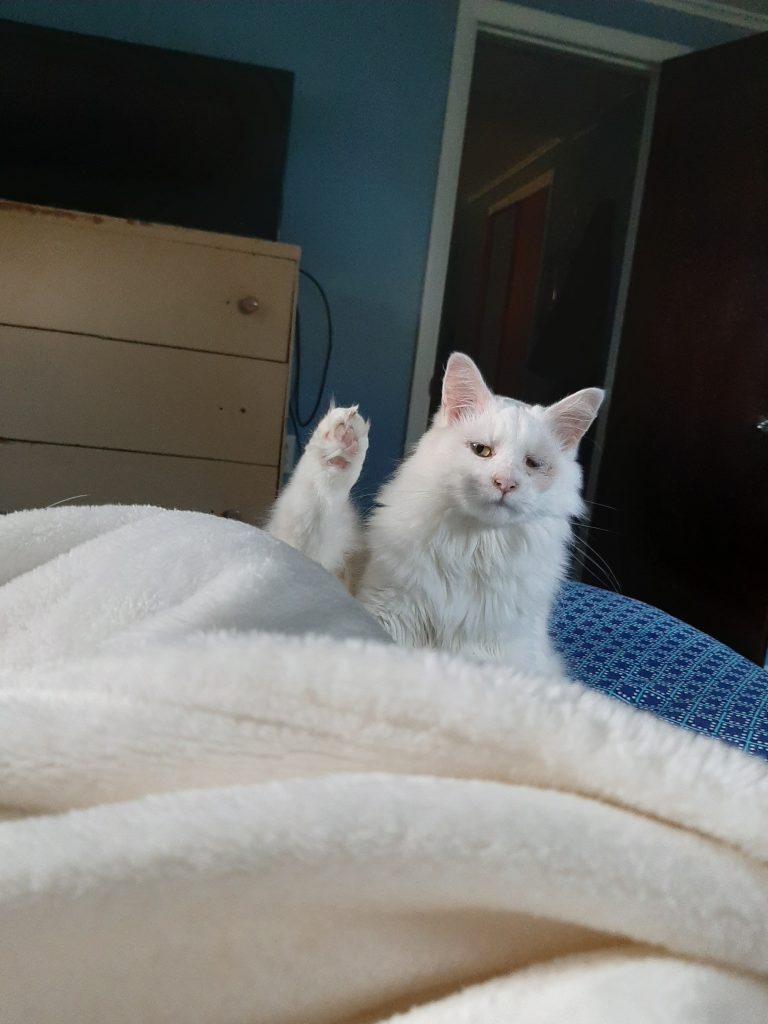
My cat Jaila, simply raising her hand to answer a question in class.
Hi everyone! My name is Alaina Losito. I am an English major (French minor) and I will be a senior this year at Cortland. I am still deciding between two things I would like to pursue after I graduate from Cortland. I would either like to go into journalism or I would like to be a professor and concentrate in either women’s literature or African American literature. I am currently doing online classes at home this semester due to COVID which is sad because I love the Cortland Campus and I love learning in the classroom but I guess this is the new norm now right?
This summer I spent a lot of time playing with my dogs, reading, doing at home workouts, and swimming. The weather has been really nice in Syracuse, which is where I live, so I spent a lot of time outside reading by the pool and swimming. My friend and I also went to visit my one friend in Long Island. We went to Fire Island one day which was really fun and of course the bagels down there are amazing (I made sure to bring lots back home)! Though there were the fun parts to summer, there were also the downs too. Hearing about all of the police brutality going on created a need in me to educate myself more on the systemic racism in our society. I educated myself by watching the documentary “13” on Netflix which is about the crime rates of African Americans. The documentary went over how negative portrayals of African Americans in the media are created and how this leads to further racism and convictions of people due to their race (one example would be the Drug Wars in America). I also started reading a book called How to be an Antiracist by Ibram X. Kendi. This book teaches ways to implement antiracism into your everyday life and how racist ideas have been imbedded into our minds for years and years. Though I know I have a long way to come in educating myself, I tried to spend a lot of summer looking up ways to help and educate myself and others on this topic.
Some questions/topics I would like to learn more and discuss in this class are:
How to educate and get through to people on the societal issues surrounding the topics of Race/Gender/Sex. For me personally I have found it hard to get through to people who are close minded. These people are the ones who try to say that “All Lives Matter” and “Not all Cops are Bad” and I tell them that they are wrong and I try to explain why but they won’t listen to me. Or another situation would be me telling people that certain TikTok trends are demeaning to women but think I’m just being too much of a feminist.
Discuss why being a feminist is viewed at as a negative thing by many men in our society and even some women. Also how can we change this so that being a feminist is viewed at as something positive?
My name is Ian Murray and I am entering my third year at SUNY Cortland and I’m going to Cortland to become a Physical Education teacher. Also at the college I am on the Men’s Swimming and Diving team. Right now I am not at Cortland because I have chosen to stay at home in Auburn, NY to help not spread COVID-19 and make sure that everyone is able to return safely in the spring semester. I hope to teach Physical Education at a grade school level and hopefully go even further. Even though I am on the Red Dragon swim team, the sport has been a huge part of my life and has made me the person I want to be. Other hobbies of mine are exercising, gaming, and watching sports.
The two questions I would like to learn more about for the class are how can I better understand people’s thoughts and opinions on society today, and what are some recommended actions that can help me guide others to a better understanding of ethnicity, gender, and sexuality to give the people of the world the ability to feel safe and equal today?
My name is Jessica Huber, but I mostly go by Jess. I’m from Lake George, NY. This is my last class I’m taking at Cortland. I recently changed my major from Adolescent Education with a concentration in English to just English. After I graduate in December 2020, I plan to get my master’s degree in journalism. I love to write and take pictures, which is what I spent most of my time in quarantine doing. One of my dreams is to write and take pictures for National Geographic. I will be completing my English degree at home, which is different than I expected.
Most of my summer consisted of me working as a waitress at The Sagamore Resort in Lake George, NY. Through working at The Sagamore this summer I was able to meet some incredible people. I was also able to buy my dream car this summer, a white Jeep Cherokee. In my free time, I’m either going on a run, taking pictures, reading or writing, or hanging out with friends. I don’t have any pets right now, but my family and I are currently looking for a new puppy to adopt. A couple facts about me are: my favorite color is green, my favorite animal is a sloth, Disney movies are my favorite, and two of my all-time favorite shows are Friends and New Girl.
Two topics or questions I am interested in learning/talking about during this course are: 1) What can young adults do to further their understanding of race, gender, and sexuality? 2) How can young adults use social media to talk about race, gender, and sexuality to help make an impact on others?
I’m looking forward to meeting everyone and having some great discussions!
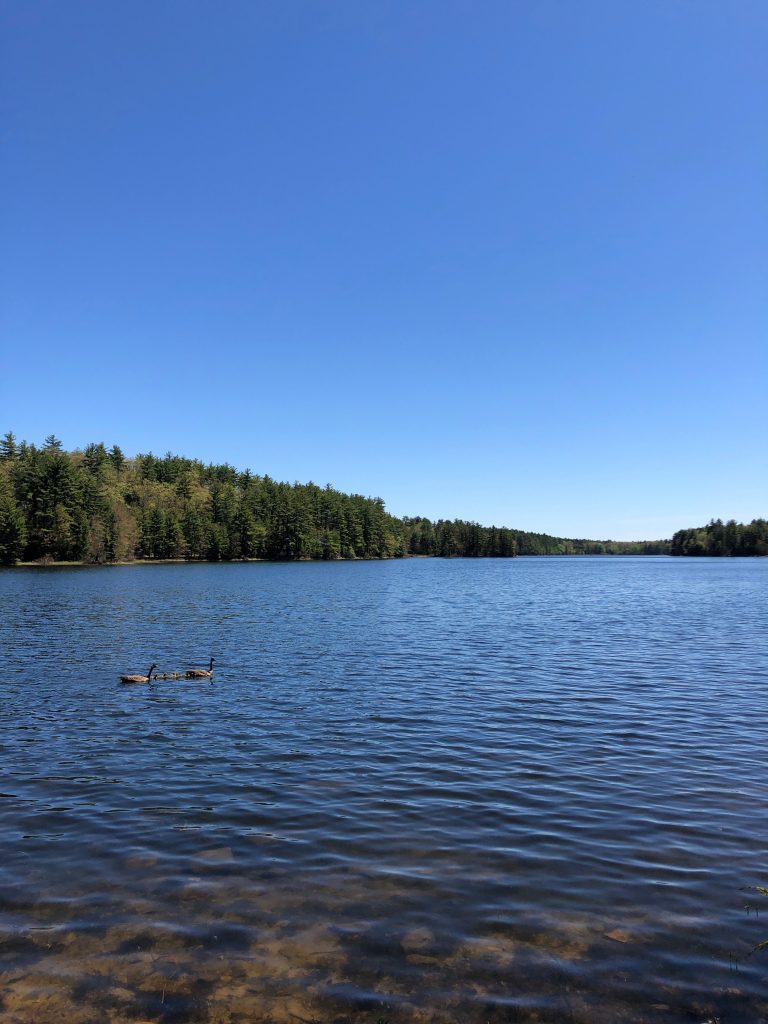
Here are some pictures I took during quarantine:
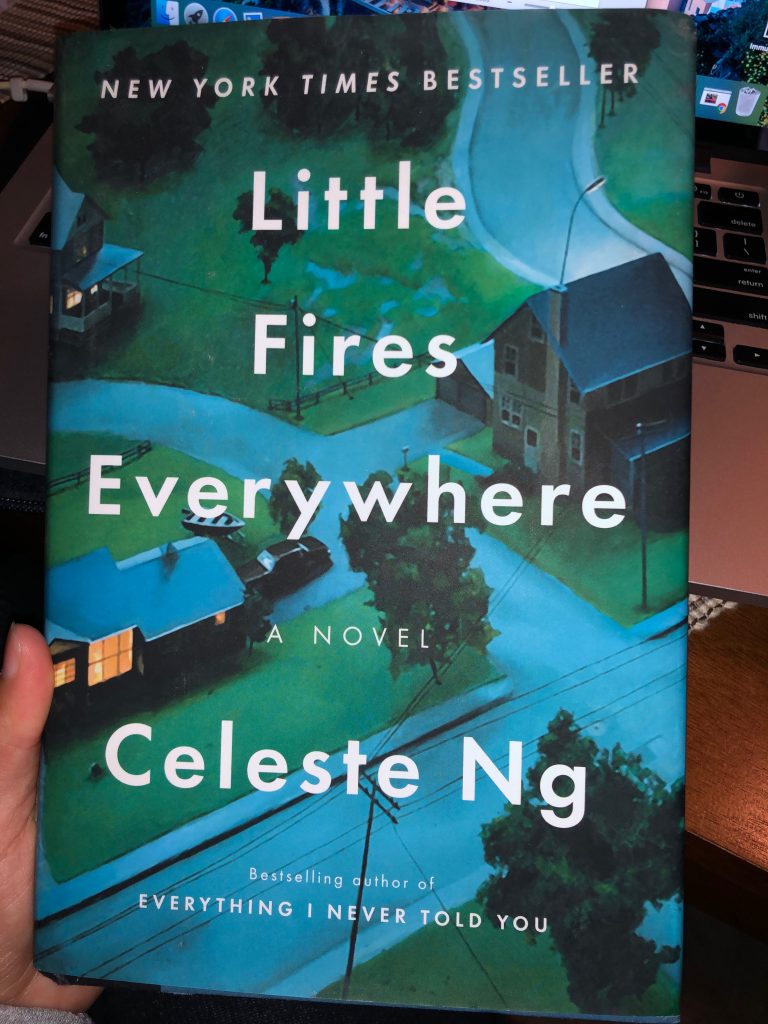
This is one of my favorite books I read during quarantine!This is a picture of my favorite place to go running. I took this picture on one of my runs during quarantine.
This is my grandparent’s puppy Duffer. My grandparents live in Florida and I was able to visit them in March, right before quarantine started.