Pandemics – Homework for 11/09

Coronavirus Officially Declared a Global Pandemic
Image Credit to Google Images

For our lesson, our group is exploring pandemics and how they affect our world, lives, etc. Please read Wald_Contagious.pdf (2007) and re-read Arundhati Roy: ‘The pandemic is a portal’ | Free to read (2020) by our class on Monday (11/09) at 4:20p.m. Also, if your schedule permits please respond to the following discussion prompt on this blog post:

– How has/is our current pandemic affecting you, your family, the area you live, other groups of people, the U.S., or the world as a whole? Feel free to be as personal as you’d like (remember this is a public site) or as broad as you’d like. Try to connect this response in some way to the required readings.

As a reminder, we would love for you all to participate in answering this question, however, we are all only human and if you are unable to get a chance to post, please have the required readings completed for our class lesson.

Thank you all so much and we look forward to discussing pandemics with you all!

– Skylar, Jess, and Gabby

HW For Mon 11 / 2 – Reading Globally Group

Our group is exploring the concept of “Reading the World,” as inspired by Ann Morgan, a London-based book editor who embarked on a project to read a book from every UN-recognized country.  Please watch Anne’s TED talk “My Year Reading a Book From Every Country in the World” and then respond to the following questions in the comments:

-What non-American or non-British books have you read in the past (K-12)? Did you read these books in translation, or were they written in English by an international author?

-Take a look at Ann Morgan’s blog and her reading list: https://ayearofreadingtheworld.com/thelist/. Read at least one of her book reviews. What books from her blog are you most interested in, and why? 

Thanks! – From Teodora, Meg, Julie, Sarah, and Lexi

Envisioning A Feminist Classroom

Feminist educators, such as Carolyn, M. Shrewsbury, have continuously worked to question the traditional patriarchal structure of education. The idea of Feminist pedagogy emerged from struggling to build a platform that values and recognizes women’s contributions, as well as creating a successful and liberating experience for all students in the classroom. 

Carolyn M. Shrewsbury uses her article, “What Is Feminist Pedagogy?” to further educate her readers on the theory, describing it as “a vision of what education might be like but frequently is not.” The theory suggests breaking away from the traditional patriarchal structure of education, in order to work towards eventually turning that vision into a reality. Shrewsbury further illustrates this vision as some sort of transformation, turning the traditional classroom into “a liberatory environment in which we, teacher-student and student-teacher, act as subjects, not objects.” The transformed learning environment will allow us to “engage with others in a struggle to get beyond our sexism and racism and classism and homophobia and other destructive hatreds and to work together to enhance our knowledge [and] engage with the community, with traditional organizations and with movements for social change” (8). 

Sadly, we live in a society in which people experience different levels of social, political and/or economic discrimination, whether it’s individual or structured. Members of dominant groups are considered to have more access to privileges while having a lack of challenges or barriers because of their powerful position in society. Whereas members of minority groups experience disadvantages, oppression, barriers and challenges because of their lower reputation/position in society. So, living under the means of a patriarchal society means that men are members of a dominant group and the women are members of the minority group. This means the traditional patriarchal structure of education is male-dominated, as it promotes male privilege, power, control and the oppression of women. Shrewsbury expresses that “focusing on empowerment” can help to push those traditional patriarchal means of power and domination behind us, which “embodies a concept of power as energy, capacity, and potential rather than as domination” (10). 

“Empowering classrooms are places to practice visions of a feminist world, confronting differences to enrich all of us rather than to belittle some of us. Empowering pedagogy does not dissolve the authority or the power of the instructor. It does move from power as domination to power as creative energy” (11).

In my opinion, this is an extremely beneficial tool to use in the classroom because it helps to encourage both students and teachers to respect one another and their differences, as well as remove the uncomfortable power standard that is placed between them. Teachers can use this strategy to speak on difficult topics that usually aren’t spoken about both in and outside the classroom walls, due to the traditional patriarchal ‘rules’ that society has placed on the education system. This can help to build community between the teachers and students, as well as avoid the fear of generating discussions and making connections with one another about these very real and important subjects. 

This brings us back to the Shrewsbury’s vision of the theory: a “liberatory classroom” that will strive, as it rebuilds the foundation of the traditionally controlled learning environment, turning it into a place where “members learn to respect each other’s differences rather than fear them” (8). I really enjoyed Shrewsbury discussion about her vision of the “liberatory classroom” because I found myself making connections to the classes that I have taken with Professor Savonick! In each class, we always talked about these avoided societal topics that are usually unspoken about because society thinks of them as complicated, or scary or too complex. These topics were never really brought up in high school, so I wasn’t really knowledgeable about any of them…until I signed up to take her course for the first time. I absolutely loved how open and comfortable we were when we were discussing about and connecting to these topics. Since it was my first time diving deep into a lot of these sometimes difficult subjects, I really appreciated how we learned through emotion, which is the total opposite of how traditional patriarchal learning is. Personally, learning through emotion helped me to develop a better understanding for what we were learning and helped other students to draw connections from their own lives, which was shared with the rest of the class. Her classes are full of individuals who are accepting, non-judgmental, caring and open to learning anything, and if there was a difficult subject to discuss, she would always guide us through it as best as she can, and she did great! I really feel as if Professor Savonick’s class is Shrewbury’s vision of the “liberatory classroom” because of the community that she builds between her and her students through her patience and honesty with each and everything we learn!

Discussion Questions:

  1. Does Shrewbury’s vision of the “liberatory classroom” remind you of a personal experience you may have had in the past? If so, explain what that experience was like and how it made you feel. If not, explain how you would envision a “liberatory classroom” and how it would make you feel, compared to a traditional patriarchal classroom.
  2. Describe what your own vision of a “liberatory classroom” would look like in the eyes of a student, or in the eyes of an educator.
  3. If you had to persuade/convince to a dominant patriarchal group member that feminist pedagogy is essential in the learning system, what would you say?

Works Cited:

Shrewsbury, Carolyn. What is Feminist Pedagogy? 1993.

The Liberatory Classroom

The power dynamic in the classroom has varied throughout societal changes in power, race, class, and gender. What is Feminist Pedagogy? by Carolyn M. Shrewsberry imagines a new classroom that is based in feminist pedagogy. Shrewsberry considers certain tools instrumental to her ideal environment. For example, she defines leadership as a tool in the classroom that is “a special form of empowerment that empowers others.” The classroom in which leadership, empowerment, and community are exercised in their most positive capacities are a rarity; yet, they remain the vision of feminist pedagogy. “How can we reimagine the classroom?” seemed to be the theme that tied both the readings What is Feminist Pedagogy? and Black Feminist Pedagogy together. Feminist pedagogy also encapsulates engaging the classroom in a way that goes beyond sexism, homophobia, and classism.

Personally, the element of her reimagined classroom that stood out the most to me from the reading was what Shrewsberry calls the “liberatory classroom,” where she imagines students and the teachers learning to respect each individual’s differences, and remove the presence of fear in the power dynamics often found among them. In other words, the fear that is present at times in classroom creates power dynamics that enstrange students and teachers from one another. The “liberatory classroom,” based in feminist pedagogy, seeks also seeks to restructure the classroom by bringing those unspoken biases that society has accepted for so long, exposing them, discussing them in the classroom, and restructure the classroom accordingly. This strategy is aimed at eliminating fear of one another and of conversation, and that’s why I believe it will be affective.

 “The classroom becomes an important place to connect to our roots, our past, and to envision the future” (8). However, such a classroom needs to be created in the absence of fear, but fear holds a dominant presence in the classroom if the economic, gender, and social differences are kept so quiet that those in the classroom begin the fear conversations and connections with each other due to a lack of understanding of various backgrounds. As Shrewsberry says, “we must learn to respect our differences rather than fear them.”

Another place where fear comes from is fear of one’s own ignorance. We live in a culture where some people are intentionally offensive, but even more so, we live in a culture where those who want to be better participants in society notice those ignorant, offensive people and fear that they themselves will become one of them. I believe this results in many of the silences we witness as college students in the classroom when complicated societal topics are brought up. A fear to speak, to ask questions, and to expose discriminatory stigmas based on their fear that they do not have knowledge of the topic at hand, due to a lack of experience with the topic at hand. I see the “liberatory classroom” as a method in which we can use to not only deconstruct those fears in the classroom, but to encourage and surface such conversations.

I think Shrewsberry points out two very specific and useful tools that can practically be implemented into a classroom setting. The first is making the act of respectful questioning of one another a norm, and the second is respectfully making it explicit when a student or teacher has an assumption about someone in the class. Practically, this will take both a willingness to be humble and a willingness to speak up, which are difficult things for a teacher to implement in a classroom, but a persona that teachers could model for their students. Being able to respectfully question one another, admit biases, respectfully point out biases, and asking questions without attempting to destroying another’s perspective is the ultimate ideal of the feminist classroom. This ideal  “empowered creative energy” I believe can lessen the biases between those in the classroom, and ultimately encourage conversations that close the gap people have between fear and ignorance. In other words- we must create an environment where we can inform without offending, and learn without arrogance.

I think a perfect example of how fear can take over the classroom is represented in the reading Black Feminist Pedagogy by Barbara Omolade, who brought to light a narrative I could have never imagined myself, but I was very grateful to hear of her experiences. Barbra, the author of the article, is an African American female. She accepted a position in a Black Women Studies course. She was an ideal candidate for the job because she was completing her MA in Black Women’s Motherhood. Barbra reported feeling an instant obligation and sisterhood to the black women in her class. “Like myself, the average student is a thirty-five-year-old Black working woman who heads her own household and is employed in one of the city agencies,” Omolade expressed (34). Omolade says at first she tried to not even consider the class difference between her and her students. She didn’t want to acknowledge the power difference among her and the black women she was teaching. As she was someone who was once in the place of those in her classroom- a person of color who was unemployed or working an administrative job- she was very fearful of coming across as judgmental to the women in her class. She was frustrated with herself for beginning to think of them as unintelligent. When she brought it up tp her colleagues, she had a moment of realization when her coworker said, out, “Barbara, you just feel ashamed of their ignorance, because they are a reflection of you. You see yourself in them and get angry when they don’t measure up” (34). I think a lot of us fall under this category- of not only judging one another in the classroom, but also feeling judgement towards our classmates and teachers because we feel like they represent us in some way. Omolde’s fear of discussing classism in her classroom created a disconnect and eventually a resentment between her and her students, even though she related to them a great deal.

In light of these readings, I want to ask you all three questions to get us thinking about how fear is implemented into the classroom, and how we can eliminate it in a practical way.

  1. What is a specific conversation (ie, race, class, gender identity, etc.) in which you believe classmates and or teachers might be afraid to talk about in a classroom setting, and why?  
  2. Can you give an example of what a “liberatory classroom” that Shrewsberry discusses might look like?
  3. If you feel comfortable sharing, in what ways have you experienced fear and/or discrimination in a classroom setting?

Works Cited

Shrewsbury, Carolyn. What is Feminist Pedagogy? 1993.

Omolade, Barbara. A Black Feminist Pedagogy. 1987.

Feminist Pedagogy: What We Learn and How We Learn It

Recently I attended an online conference presented by ACUE called “Creating an Inclusive Online Learning Environment”. I thought most of the information was very useful, except there was one line that stood out to me: “Structure helps everyone and hurts no one”. It reminded me of when Barabara Omolade says, “the absence of structure leaves students without a clear sense of where the course is going. It is like telling students to drive to California from New York without knowing how to drive very well and without a road map” (39). At first I thought, ok this works, but then I also thought of hooks’ experience with college structures, “I struggled to claim and maintain the right to be an independent thinker… they often used the classroom to enact rituals of control that were about domination… Nonconformity on our part was viewed with suspicion…an undercurrent of stress diminished our learning experience” (hooks 4-5).

There are times when I need structure, it keeps me accountable; however, structure can also be limiting, confining, suffocating. Some students need structure, I agree with that, but other students need the flexibility and the malleability a feminist pedagogy could provide. To say that “structure hurts no one” is a very limited perspective of not knowing what it is like to be a single mother with a sick child, writing a paper until 2am for an 8:30 am class that has an hour commute, while still wondering what to do about day care. I was unable to stay home since I had already used my only allowed absence when my car broke down. Having a sick child is scary enough, but to have to ask for an additional absence and be told that my “unexcused absence” will decrease my grade is just another stress that weakened my drive to learn.

Although hooks is writing of the boredom involved in class lectures, the struggles of a single mother also encourages teachers to “rethink teaching practices… strategies to enhance learning…[and] recognize that each classroom is different, that strategies must constantly be changed, invented, reconceptualized [sic] to address each new teaching experience” (7, 10-11).

Omolade offers three levels of structure within Black Feminist Pedagogy: 1. power being expressed through the relationships and personal connections between teacher and students, 2. assessment being complicated by ideas versus grammar and having to face uncomfortable feelings to raise the bar for her students so that grades are based on ability to communicate, without exception and 3. the institution having influence on teaching methods, content, and political understanding.

Going off these three premises, Shrewsbury has three points of teachers’ responsibility to their students; to enable empowerment, instill a sense of community, and promote leadership. Enabling empowerment consists of creating individual and collective goals, fostering independence, instilling individual responsibility to the whole, promoting the development of frontal lobe skills, and increasing students’ self-esteem and competence (Shrewsbury 10-11). Shrewsbury also brings up the notion of the joys and difficulties of learning—one such joy and difficulty is the development of self and the distancing from society. As hooks writes, “School was the place of ecstasy—pleasure and danger. To be changed by ideas was pure pleasure. But to learn ideas that ran counter to values and beliefs learned at home was tom place oneself at risk, to enter the danger zone” (3).  To instill a sense of community, Shrewsbury states teachers must: understand the classroom as being a collection of distinctly different individuals who are coming together in a classroom community; have awareness of the difference between men and women, according to her being that men want rules and women want connections (12); and acceptance that “Decision making when there is a community of mutuality rather than a community of isolated individuals can take place by consensus as well as by formalized decision rules” (12). In other words, rules can be made and changed when individuals decide to work together. The leadership aspect ties back into empowerment with individual and collective goals, the development of frontal lobe skills, responsibility to the whole, and a display of competence; however we need to express “our ability and our willingness to act on our beliefs” (13) because without empowerment, leadership is impossible.

hooks also promotes empowerment to transfer lessons into the world, flexible agendas, focus on individual needs, establishing community, acknowledgement of intrinsic value and collective contribution, the deconstruction of old values, putting together a collective effort for change, acceptance and discussion of individual differences that diverge from heteronormative standards, and exert an effort to stop biases and domination (6-10).

What all these reading have in common are the ideals that the teacher is not the head of power, but an active participant in the classroom community, that we must discuss what we know and reflect on our personal experiences as individuals (on topics such as abuse, sexism, discrimination, racism, and so forth) and work together in a group effort to learn about the histories and experiences of women and other oppressed communities so that we can create social change and change our reality outside of the classroom.

Three questions I want to ask in order to generate a collection of histories of our unique class are: (Note: Remember this is a public site)

  • What situations have you experienced oppression for your differences as an individual, in the classroom setting or outside of it?
  • What situations have you experienced in which the common norm has been challenged and successfully renegotiated?
  • What can we do in our daily lives and/or as a class to instigate social change?

Addressing the Spaces that Queer Children Inhabit from “Dancing Queen” to Schools

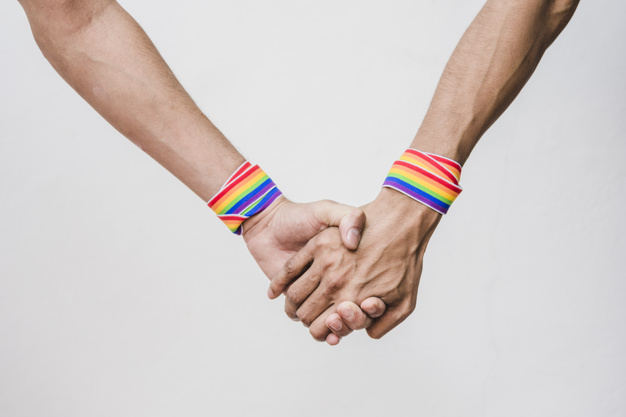
Image Credit: Freepik

Being in love should never be interconnected with death; however, when it comes to LGBTQ+ teens, this is frighteningly the case. Whether you read Sedgwick’s “Queer and Now” or “How to Bring Your Kids up Gay”, you find that she stresses “that queer teenagers are two to three times likelier to attempt suicide, and to accomplish it, than others” (“Queer and Now”). Mentioning these chilling truths at the forefront of both texts, emphasizes for the reader that they need to be aware of who they are fighting for and the severity of the situation. But how? How do we go about bringing such change when educators (like a handful of this class are striving to be) can be fired for showing any recognition of understanding their queer students or being queer themselves?

The Equal Employment Opportunity Commission (Federal Government) continues to update their laws, including those involving the employment of queer teachers. Their website has a page dedicated to these laws; however orientation and transgender identification is not present on their main page or links to discrimination in the workplace laws (https://www.eeoc.gov/discrimination-type). Despite having twelve categories to many other important topics, LGBTQ+ rights are missing which is something that I believe should be included on that list. At the state and local level, fair employment law activists have been pushing for more laws not only prohibiting sexual orientation discrimination, but also discrimination for teachers who identify as transgender.  Some examples include NY State’s Sexual Orientation Non-Discrimination Act (first added in 2002 as part of their Human Rights Law) and more recently in 2019, the Gender Expression Non-Discrimination Act which included transgender identities and others in the spectrum.

I would also like to bring up the article, “Dancing Queer Children”, specifically highlighting the heteronormative speculation JJ receives on a show that embraces the openly queer. Despite being queer himself, JJ is told by the mothers of the show that the girls and even other mothers will fall head over heels for him. Also, despite being clearly underage, the mothers push the envelope by even creating the sexual innuendo of girls coming back stage to get “some ice cream” and finish it off by aging him up and saying that he is “the man of the group”.

Ew.

When reading the section, I was reminded of the numerous times I myself along with others have had to deal with heteronormative claims, like the all-too-popular gender reveal parties and the comments under same-sex wedding pictures exclaiming “Double wedding! #FriendGoals”. It feels like the heterosexual population is trying to stick LGBTQ+ daily existence under a veil while still waving a token card stating that people should not worry because they have a gay friend. It’s strange to me that on a show like ‘Dancing Queen’, mothers would fall into this skewed normative behavior in order for what, I am sure, they thought was “funny” banter before a show. Even more disturbing are their repeated comments falling into pedophilic red-flag territory, all for the purpose of portraying the sole male child of the group as being the epitome of masculinity and “manly-man-ness”.

As Sedgewick has explained multiple times in both of her texts, there appears to be a heterosexual culture of purposefully masculinizing seemingly-effeminate boys by coercion of traits and understandings via a male mentor or speech like what was said on the show. According the analysts she mentions is “How to Bring Your Kids up Gay”, a homosexual can only be healthy if they are grown up and act masculine. That sounds extremely contradictory and damaging for LGBTQ+ youths or people who do not actively conform to gender norms. The “Gender Identity Disorder of Childhood” diagnosis the Sedgewick mentioned brought up some interesting things that I will include in a question about how boys who suggest femininity are treated much more harshly than girls who directly deny their femininity in what is classified as part of effeminophobia. I believe this may be a consequence of the notion of kinship and independence. Girls are encouraged to hug each other and go to sleepovers, while optionally taking on the role of being a “strong, independent women”, while boys only have the choice of being independent and claiming “no homo” when showing any sign of affection or companionship with other boys.

These texts brought many things to attention and are meant to leave the reader pondering. That being said, my questions for you all are:

  1. In Sedgewick’s “Queer and Now”, she mentions to her seminar of students (mostly comprising of heterosexual students) that she built the class for a primarily queer audience. As a result, the students were outraged by this due to their straight-entitlement. This happened back in the 1980s. This makes me think if the same view would be still observed in 2020. Have you seen such behavior happening in today’s queer-focused classes? Has there been a shift in the audience demographic?
  2. At the time of writing “How to Bring Your Kids up Gay”, Sedgewick wrote about how studies on homosexual relationships seemed to be “exclusively about boys”. Why may this be? Why is femininity not shoved down young girl’s throats (to the point where being a tom-boy is acceptable), but masculinity is?
  3. Thinking about “Dancing Queer Children”, what can we do to make elementary and middle schools inclusive for queer/questioning children?

Works Cited

Sedgwick, Eve Kosofsky, “How to Bring Your Kids up Gay”. Social Text, Duke University Press, 1991.

Sedgwick, Eve Kosofsky, “Queer and Now.” Tendencies, Routledge, 1994.

Zaborskis, Mary. “Dancing Queer Children.” Public Books, 17 June 2020, www.publicbooks.org/dancing-queer-children/.

The Radical Potential of Queer Politics or: Why Right Now is The Time to Engage with Queer Activism

Source: BeaconBroadside.com

I was fortune enough in my undergrad here at SUNY Cortland to be able to take a Queer Theory class. During that class, I was able to take my first real look into the actual texts of queer theory. Before this point, I had been writing papers about the LGBT community but it had always been in one way or another about justifying queer peoples right to exist. Now this isn’t necessarily a battle that needs to stop being written about, especially as queer folk continue to be killed, kicked out, and other horrible things based solely on their queer identity. What my engagement with stepping out of the realm of justification and into the realm of queer theory allowed for was a better understanding into what the hell I was fighting for in the first place. Cathy Cohen’s piece “Punks, Bulldaggers, and Welfare Queens” was a text I was first introduced in that Queer Theory class. Reading it again, in the light of the pandemic we find ourselves in, I’ve found new meaning through Cohen’s question of “whether there are lessons to be learned from queer activism that can help us construct a new politics?” (438).

The argument that Cohen poses throughout this essay is an elaborate one. There are many factors that contribute not just in critiquing how queer activism had been performed during the time this was written (’97), but also how to expand the understanding of queer past just gender and sexuality. One of the most controversial arguments, in my opinion, that Cohen says comes in the section right before the conclusion. In this section “Heterosexuals on the (Out)side of Heteronormativity”, she argues in the inclusion of heterosexuals into aligning themselves with the queer. The justification for this comes from the other queering factors that can encompass a persons identity that have nothing to do with sexuality. Aspects such as: race, class, gender, and disability (my inclusion). All of these, Cohen argues, are all factors that can push a heterosexual person outside of the realms of what it means to be heteronormative. Thus, by including them within the fight for queer activism more voices are able to be used to enact change. These aspects, and the multilayering of these aspects, also create unique voices that have also been ignored by the systems put into place.

I don’t think this concept is entirely as controversial as when this article first came out, but the idea of encouraging heterosexual people into the queer community has often been debated. The benefits of this, as Cohen states, create the allowance for a plethora of voices all advocating for a very specific type of political reform. The more diverse an audience gets, in this case, should spread more attention to each without ignoring one in favor of becoming something more heteronormative. By having a black lesbian transgender woman on the same side as a cis hispanic heterosexual working class man should, in theory, gain more attention to all sides of the die. No one concept would overwrite the other and would not, inadvertently or otherwise, push another community down in the sidelines. Example being that by advocating the end of the wage gap, an attention would also be paid to how gay and racial minorities are being especially affected and forced into poverty through political and social circumstance.

Okay, great, I hear you say, Cohen is asking us to include everyone so that real change can be made politically. What does that have to do with what’s happening now? My answer is: how isn’t this about what’s happening now?

We are at a moment in history we have been calling the “new normal”. The “new normal” takes place between everything before March of 2020, and an indefinite future where theoretically we would be able to go out in public without masks and be able to be around large groups of humans again. This new normal has already, as we have discussed in class, been a place where people are beginning to recognize the inherent problems that we have created in society. Suddenly aspects of life that the large majority of people took for granted are brought to the front like never before. Like the articles we’ve discussed already in class, racism, sexism, and classism has been exposed in ways like never before. Beyond that, domestic abuse, sickness and disability, and many many other things are being suddenly brought to the attention of people who never had to think about it before. For so long we accepted the impossibility of working from home or extended sick days, at least until a national pandemic set in and suddenly we were able to accommodate people. Examples like this keep on piling up. This is where Cohen’s ideas need to start to becoming important Right Now.

Whatever the world is going to look like when we get out of this pandemic, it’s imperative that it doesn’t look like the world we came from. Queer activism might be the only solution to actually making the changes that we want to see in the world. Cohen’s idea of banding together everyone who does not fit within a heteronormative world is the only way to ensure we don’t end up at the opposite side of this pandemic with the same issues we started with.

Response Questions for you:

  1. What might queer activism look like in our pandemic age? How is this different than how activism has been previously done? What might that change actually look like? Do you feel like change can actually be made?
  2. This can be answered or not, depending on comfort level, but examine your own identity. What categories might you fall into that you wouldn’t have necessarily considered as queer until now? How might your unique perspective help create change?

Sedgwick’s Lens on Queer: “[Overturning] Society’s Traditional Views of Sex and Sexuality”

Photo credit to Google Images.

The Oxford English Dictionary provides us with multiple, vague, and differing definitions of the term “queer” such as “With the: that which is queer (in various senses). Rare.” and “Strange, odd, peculiar, eccentric. Also: of questionable character; suspicious, dubious” (OED). I found both of those explanations of “queer” to be outdated, however, I did come across a third, more appropriate definition of this term provided by the OED: “colloquial (originally U.S.). Of a person: homosexual (frequently derogatory and offensive). In later use: denoting or relating to a sexual or gender identity that does not correspond to established ideas of sexuality and gender, especially heterosexual norms”. 

During the 16th century, the word “queer” began as an adjective meaning strange or peculiar which is one of the first definitions to show up on the OED. Overtime, as gay and lesbian people began to make themselves known to society, the word “queer” developed into a derogatory word to negatively describe a non-heterosexual person. It is not until the late 1980s that “queer” transitions into a more positive description that the LGBTQ+ community embraces as their own; “By embracing a word that was used to attack or degrade, the gay community has demagnetized the strength of the word, making it a common everyday term. This lessens the effect of the word when used against them” (Johnson). Furthermore, it is important to realize that our understanding of the word “queer” today is a whole lot different than where it originated from. It became a term used against gays and lesbians because during the early and mid 1900s, society publicly consisted of heterosexuals’ relationships. When people begin to publicly announce and show their homosexuality, it is considered “strange” to the rest of the public since it is outside of their “norm”. However, it is so empowering to see this word change overtime and become a term that the LGBTQ+ community claims and is proud of given the history and denotations of the word. It shows how powerful we can be when communities come together and push back against certain outdated “norms” in our society.

Eve Kosofsky Sedgwick’s piece “Queer and Now,” collected in her book Tendencies pushes against the dominant cultural understanding of what it means to be “queer”. Her article fights against society’s political attempt to erase the complexity of queerness. When discussing the question “What’s “queer”?,” she focuses on the Christmas season and how it is a time of year when every institution is “[lined] up with each other so neatly”  and “everything means the same thing”. Furthermore, she encourages us to think about what society decides is “family” identity and then provides us with a list that contains the various elements that construct the “family” such as “surname,” “sexual dyad,” “a legal unit based on state-regulated marriage,” and “a mechanism to produce, care for, and accurate children”. I found this list to be unrepresentative of all the elements of “family” or kin because it is, like a lot of identities, one that cannot be strictly limited to specific criteria. However, society constantly continues to press these criteria’s onto identities. Immediately after her “family” example, she asks us to think about sexual identity and provides us with another list containing the various elements in our society that make up “sexual identity” such as “your biological (e.g., chromosomal) sex, male or female,” “the gender assignment of your prefered partner (supposed to be the opposite of your own),” and “your enjoyment of power in sexual relations (supposed to be low if you are female or feminine, high if male or masculine)”. Sedgwick uses these two terms and lists to emphasize the fact that society tries to organize these identities into a “seamless and univocal whole” but when doing so, they leave out important dimensions of these identities. 

Sedgwick discusses “queer” as a continuum in that it is a concept that is fluid, open, and changing from one individual’s sexuality to another. She writes “one of the things that “queer” can refer to: the open mesh of possibilities, gaps, overlaps, dissonances and resonances, lapses and excesses of meaning when the constituent elements of anyone’s gender, of anyone’s sexuality aren’t made (or can’t be made) to signify monolithically”. Rather than limiting the term “queer” to a single, static, “set and stone” definition, Sedgwick invites us to think of queer as almost an adventure of discovering, claiming, and embracing our own sexuality. Further, she writes “a lot of the most exciting recent work around “queer’ spins the term outward along dimensions that can’t be subsumed under gender and sexuality at all”. The idea of “queer” opens up a universe of endless possibilities for defining and understanding one’s self.

After completing some background research on Eve Sedgwick, I found out that she discovered “queerness” in one of her essays titled “A Poem Is Being Written” where “she writes of the trauma of finding out that a beloved junior high school teacher had been arrested for a homosexual incident” (Smith). Another interesting aspect about this particular essay is that she associates the rhythm of being spanked as a child with the rhythms of poetry. Sedgwick’s states that her essay, “A Poem Is Being Written” is about the “relationship between art and sex, between poetry and those for whom spanking fantasies, or spanking behavior during sex, are part of their sex life” (Smith). I found this to be intriguing because we often do not discuss our sexual fantasies to the public nor do we associate them with aspects of literature. However, Sedgwick’s writings suggest that art, literature, sex, gender, sexual pleasures, etc. all intertwine with this multifacet, dimensional term known as “queer”. 

Here are my two questions for you all:

  1. Do you think that it is possible for a patriarchal society to not be homophobic? If yes, why or if no, why?
    • Can our society bring homophobia to an end, if our economic and political structures do not change?  
  2. What was your definition or previous education of the term “queer” before you read the assigned readings for this week?
    • If you have been taught about queer theory or “queerness” – when and where did you learn about it and how was it taught to you? If you have not previously learned about queer theory or “queerness,” why do you think it has taken until now for you to become more educated on the topic?
  3. Why do you think society is often uncomfortable discussing sexual pleasures, sexual fantasies, and sexual excitement? 

Works Cited 

Johnson, Ramon. “The Word Queer.” LiveAbout, www.liveabout.com/is-queer-a-derogatory-word-1410154.

“queer, n.2” OED Online. Oxford University Press. <https://www-oed-com.libproxy.cortland.edu/view/Entry/156235?rskey=gGK1yJ&result=1#eid>

Sedgwick, Eve Kosofsky, “Queer and Now.” Tendencies, Routledge, 1994, pp. 1–20.

Smith, Dinitia. “’Queer Theory’ Is Entering The Literary Mainstream.” The New York Times, The New York Times, 17 Jan. 1998, www.nytimes.com/1998/01/17/books/queer-theory-is-entering-the-literary-mainstream.html.

Let’s Talk Racism… But Also, Let’s Do Something About It.

I’ll be honest, the readings for this week were particularly overwhelming for me. Although there was much to learn, which is a good thing, I realized that there was a pit forming along with an unsettling feeling in my stomach. Perhaps that’s why these things are tough to talk about. The nature of racism and white supremacy is one that will make any decent person feel sick. That’s exactly why we need to do something about it.

Like with any reminder of my disadvantage in the world, I felt sick the first time I tried to interpret Joseph Conrad’s “The Heart of Darkness” and argue against his claims  — angry and disgusted —  not shocked or confused. Achebe’s critical look at Conrad’s racist image of Africa and subsequent dehumanization of black people calls attention to something imperative. He points out that, not only is this text inherently racist, but it somehow manages to do so without being extremely obvious to some readers, even those claiming to be scholars! What an amazing feat that has allowed Conrad to gain critical acclaim in the literary world and, as Achebe notes, his work previously hailed as “among the half-dozen greatest short novels in the English language.” Ah yes, there goes my last good brain cell. Why is it that some people could read “The Heart of Darkness” and interpret it through every lense except that of racism and white supremacy when this ugly theme is at its core and so clearly evident?

If modern times have taught us anything, well, it’s that we’re not nearly as sophisticated as some would believe. For example, if prejudice and discrimination are still severe issues in today’s world as much as they were in the world sixty, or even two hundred years ago then friends, I believe we have a major problem (but you guys already knew that). Taking a look at Delgado’s introduction to “Critical Race Theory,” he poses the question of “how much racism is there in the world?” He follows this with evidence that researchers have actually found a decline in racism and acts of violence against black people and other minority groups. Here’s a question for you: If research shows that racism is on the decline, then why does it constantly feel like the exact opposite? Or better yet, why do some people fullheartedly believe that racism simply disolved into thin air on the day that formal slavery or segration ended? What’s up with this sort of Mandela Effect of racism?

Well I can say with certainty from my own experiences with racism that the struggle isn’t even close to over. I grew up in one of the most racially segregated parts of America — Long Island, NY. My school district was 100% black and hispanic as I moved up from K-12, despite my town apparently being about 30% white. I remember being a kid and playing catch with my friend outside when our neighbor’s kids came home from soccer practice. We thought that it was the perfect opportunity to invite them to play, so we cheerfully strided over to them and asked, only to have their mom give us a dirty look and quickly shooed them inside. Before going to college, the only white people I could ever interact with were my teachers. In my subsequent years at this very college, I’ve faced workplace discrimination during a summer job and had racial slurs hurled at my friends and me while walking on campus at night over the years on several occasions. I’ve had to fear for my safety in this world, not just as a young woman, but as a black woman.

In Claudia Rankine’s piece discussing class, power and race, she affirms that the greatest power of white privilege is the sense of security that it provides. White privilege is like a cloak that protects the wearer from prejudice, discrimantion and hate based violence. This is a luxury that black people and other minority groups are never afforded. It’s a sad truth but black people are considered fortunate if they can make it through life without being murdered on account of their skin color. The narrative of black people feeling that they need to be prudent in their daily lives in order to simply live to see another day is way too common. In the Boston Globe article by Aaron Thomas, he describes desperately wanting to “stay alive” while also wanting to… huh whaddya know, “STAY ALIVE.” His words are like a punch in the gut to me because I know exactly what he means as my friends, family and I all had to face the same frightening dilemma — wear a mask and risk being killed as a victim of discrimination, or don’t and face being killed by a deadly disease. No one should ever have to grapple with this “choice.” 

For those out there who may want to gaslight and pretend that this isn’t a real issue, here’s a story: Three weeks ago, two of my best friends were handcuffed and detained by police in a Target on Long Island because the manager thought that they looked suspicious and claimed that they were stealing based off of video evidence. Just so you know, there was no “video evidence,” the manager made it all up. Although my friends are lucky that the situation didn’t escalate, and thankfully lived to see tomorrow, as we’ve seen time and time again, it only takes a split second for these situations to end with innocent lives being lost. Though, something was lost that day as it continues to be lost everyday — innocence, trust, and hope for a future where black people don’t have to be scared to even be alive. White supremacy is a deadly myth that still thrives in society today as it is passed on like an inheritance from one generation to the next, in other words, it’s a deadly cycle but therefore it can be broken. Let’s do that. The first step is talking about it. The rest is doing what we can to promote and support racial equality because despite racist falsehoods that people like Conrad have spread, I know that black lives matter.

Some questions for discussion… 

* Why is it that some people could read “The Heart of Darkness” and interpret it through every lens except that of racism and white supremacy when this ugly theme is at its core and so clearly evident?

*If research shows that racism is on the decline, then why does it constantly feel like the exact opposite?

*Why do some people foolheartedly believe that racism simply dissolved into thin air on the day that formal slavery or segregation ended? What’s up with this sort of Mandela Effect of racism?

‘Too Far’ Hasn’t Even Come Close

Have we done enough? Honestly, my answer would be an emphatic “NO”. Since the death of Georgy Floyd, the world has come alive with shouts for reform in local, state, and federal government, and while the moment is electrifying, there has been a swift and deliberate counter-movement, whose goals can be very simply surmised with the phrase “too far”. I was elated when, in her interview, Claudia Rankine mentions a separate interview in which the interviewer asked her “But aren’t there places where you go too far?” to which she responds “Well, how? Do you mean when somebody says something racist to me, for me to call it out is to go too far?” It’s that sense of the decorum around receiving racism which makes absolutely no sense” which is a very mild way of putting it. Although this is only one singular instance, it very clearly illustrates the reality in which we currently find ourselves.

In spite of a world that is quite literally falling apart, we are – as Thomas puts it – “living in an America where history dictates that, even in the most absurd times, hatred and bigotry continue to reign”. Thomas’ description of the exceptionally unique fear of being a black man in a time where the law requires us to cover our face in public. Now, I read Thomas’ article after Rankine’s, so I had this new definition of privilege in my head which made Thomas’ article more difficult to read. And, truth be told, there is a point where what I feel can only be speculation because the fact of the matter is I will most likely experience “the fear of being mistaken for an armed robber or assailant is greater than the fear of contracting COVID-19” as Thomas so aptly describes such a deeply rooted, generational fear. That is the privilege that Rankine was speaking to, an existence free of worry, and a sentiment that Thomas echoes when he clarifies his definition of privilege: “White people think when I say white privilege I mean economic privilege but I mean white living. The ability to stay alive”.

He pairs his experience with his observations on whiteness, especially as it has been viscerally exposed within the past months. But I think the most important part of this article is his view of whiteness, and its need to remain unnoticed, unchallenged: “There’s a deep psychological need for whiteness to go unexamined. White people have one understanding about what whiteness is and to trouble it is to trouble them. And they cannot hold it, they really cannot bear it, but it really doesn’t have anything to do with me”. This is becoming increasingly apparent with the increased attention turned towards politics. I saw this sentence come to life over the summer when I saw a clip of Nancy Pelosi, exasperated and frazzled, when a group of immigration activists disrupted a press conference on the pending DREAM Act. The look of shock on her face was surpassed only by her inability to comprehend why, in her mind, the people she was trying to help were actively interrupting her attempts. That was the instance I saw this quote come to life.

It’s clear that the personal has become political, and vice versa, and because of that the notion of white privilege has started to seep out into the open, into the personalities and the political (unquestionably so in this regard). And because of this, there has been a frantic scramble to bring people together in the face of COVID because privilege is being publicly tried, and the verdict isn’t looking so good. Benjamin acknowledges this as she writes “But as a soundbite, the idea that “viruses don’t discriminate” conceals the fact that the virus is not simply a biological entity, but a biopolitical reality which travels along well-worn patterns of inequity”. She brings up the idea of “well-worn patterns of inequity” which honestly makes me worry about anything that comes from this well-worn pattern is destined to replicate those inequities, regardless of intention. My concern is that something like Critical Race Theory is going to be limited in what it is allowed to accomplish because it came from something as raced as politics.

            So, then, here are my questions for you all:

  1. What will CRT or Black Lives Matter or any other field of study or movement be able to effect systemic change before it gets silenced for ‘going too far’? Or does the very idea of systemic change threaten white privilege so much that even the idea of ‘change’ is going too far?
  2. What’s keeping white privilege alive?
css.php